
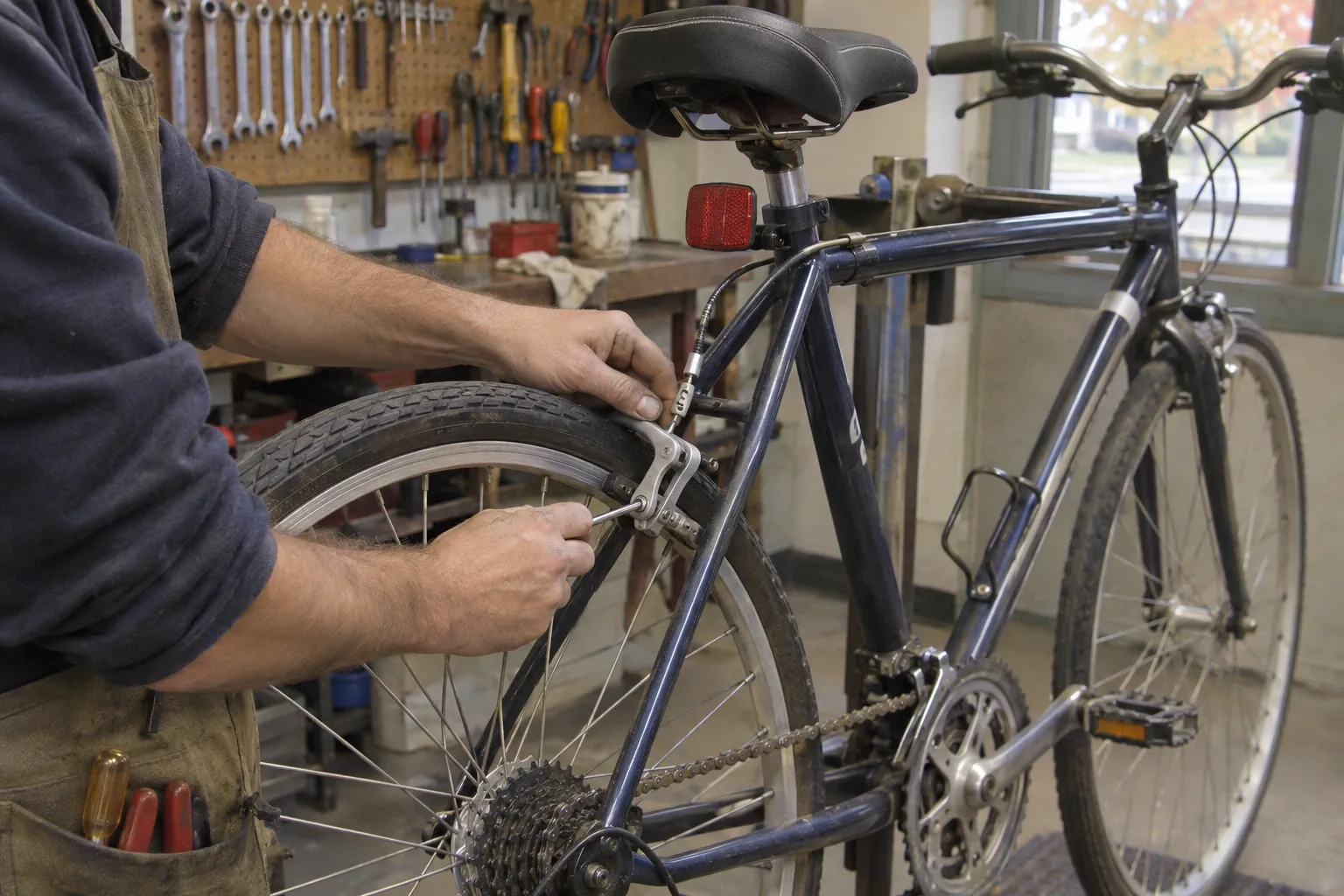
MILLFIELD — Martin Sloane had three bicycles ready for collection, two waiting for parts, and one whose owner had asked whether the repair would cost more than the bicycle was worth.
The rear wheel was bent, the chain was worn, and the seat had a split along one side. The frame was sound, though, and the bicycle fitted its rider. Replacing it would mean spending money the customer had not planned to spend.
“What it’s worth and what it’s worth to replace are two different questions,” Sloane said. “I need to give him a price he can make a decision about.”
Sloane, known to customers as Marty, opened Millfield Cycle & Repair in 1987. He sells bicycles, but much of his working day involves keeping older ones on the road: adjusting brakes, replacing tires and finding the source of a noise. He also looks over bicycles that have been put away for a season or two and brought out again with flat tires and uncertain brakes.
Late September brings riders with different plans for their bicycles. Some want to keep riding through the fall; others would rather have a problem addressed before putting a bicycle away. For people who use one to get to work or run errands, he said, a repair can affect the rest of the week’s arrangements.
“If it’s your way of getting somewhere, you can’t always leave it here until next week,” Sloane said. “I try to find that out when somebody brings one in.”
On Thursday afternoon, Ellen Price brought in her eleven-year-old son Adam’s bicycle after several days of hearing a scraping sound as he rode up the drive. Adam had told her it was nothing to worry about.
“It got louder when he came up the drive,” she said. “He said that was because he was closer.”
Sloane asked Adam when he heard the noise and what he felt through the pedals. Adam said the bicycle had fallen over while standing still. His mother said she had not seen the fall and could not improve on his account.
Sloane lifted the rear wheel and turned it. One brake pad was rubbing the rim. He adjusted the brake and pointed out that the pads were worn. Ellen asked him to replace them while the bicycle was in the shop. Adam watched from the other side of the bench, answering when Sloane asked him to squeeze the brake lever.
Ellen said she had wanted to know whether continuing to ride had made the problem worse. Adam had not outgrown the bicycle, and she preferred repairing it to buying another one. She also wanted him to tell her sooner when something did not sound right.
“He hears it before I do,” she said. “I’m not the one riding it.”
The conversation at the counter changes with the rider. A family might be trying to get another year out of a child’s bicycle or considering whether it can be passed down. Someone else may need a dependable ride for short trips and have little room in the household budget for a replacement.
Sloane records the requested work and any spending limit on a repair ticket. If he finds another problem, he calls the customer before adding work that has not been approved. Some repairs are straightforward; others require a choice between what the bicycle needs and what its owner wants to spend.
“You can keep finding things on an old bicycle. That doesn’t mean you’ve been given permission to keep adding them to the bill.”
— Martin “Marty” Sloane
Used bicycles are part of the shop’s business as well. Some come in as trade-ins, and Sloane looks each one over before deciding whether to repair and sell it. A bicycle that is not worth preparing for sale may still have parts he can use. Customers shopping for a used bicycle can ask what work has been done and try one for size.
Fit matters as much as the price tag, he said. A rider who wants a bicycle for short trips around town does not necessarily need the same machine as someone planning long rides. A bargain is less useful if its new owner is uncomfortable riding it.
Leon Webb, a retired customer, uses his bicycle for exercise and small errands when the weather permits. He has a basket for groceries and said he appreciates being able to bring the bicycle to a local shop when something needs attention. On a recent visit, he brought it in because a gear cable had worked loose.
Webb said he used to arrive with a firm diagnosis. Experience had made him less certain.
“I tell him what it’s doing now,” Webb said. “I was paying for the repair anyway. I might as well let him find out what’s wrong.”
Sloane said winter usually brings fewer urgent arrivals and more time for work that can wait, as well as less money across the counter. Parts, rent and time spent assessing bicycles all have to be accounted for through the year.
Before the Prices left, Sloane checked the rear wheel again and had Adam try the brake. Ellen stood by the counter while Adam squeezed the lever and turned the wheel. The scraping had stopped.