
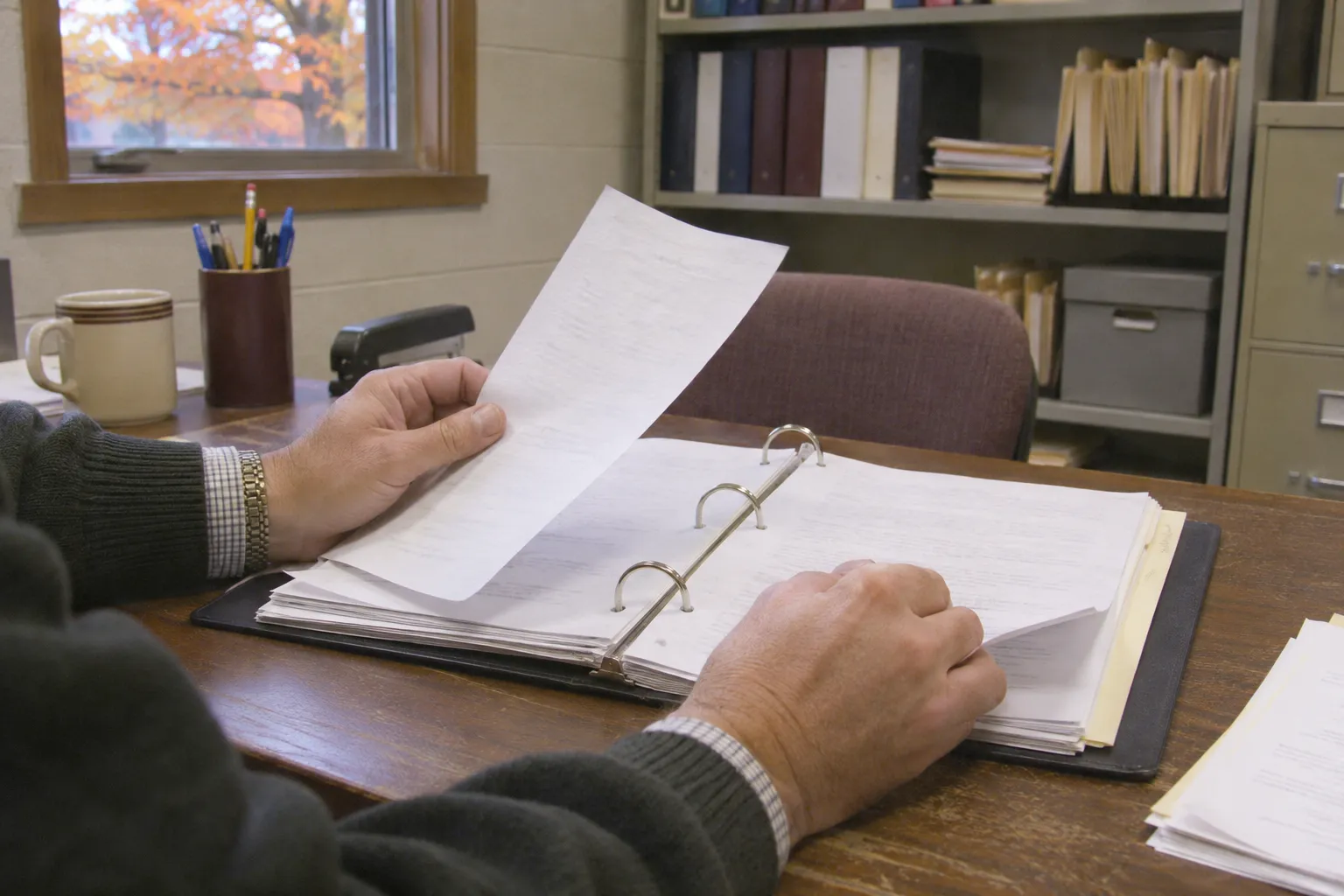
MILLFIELD — When a County Board meeting ends, County Clerk Janice Bell takes her notes back to the office with the papers used during the meeting. Her next job is to turn them into a draft that shows what the board actually did.
Bell notes motions and votes as the meeting proceeds, along with reports and other business. Afterward, she works through those notes against the agenda and the documents presented to the board. A line in her notes may be enough to remind her of a discussion, but it still has to make sense in the minutes to someone who was not in the room.
“A discussion can take a while, and the action at the end may be quite short,” Bell said. “I need to be clear about what was proposed and what the board voted on.”
She checks the wording of a motion against her notes, including any change made before the vote. She also checks the vote itself. If the board discusses an expense but puts off a decision, the draft needs to say that; the amount discussed should not look like an approved expenditure.
Figures deserve a separate look. Bell compares amounts in her notes with the papers presented at the meeting, paying attention to whether a number was an estimate, a request or an amount included in a motion. A figure can be copied accurately and still give the wrong impression if its purpose is unclear.
“When I have a question, I mark it and go back through the papers. I’d rather check it while the meeting is still fresh than guess at what a number referred to.”
— Janice Bell, County Clerk
The minutes are not intended as a word-for-word transcript. Bell said she must distinguish a report received by the board from a decision made by it, and a question from an answer. Several people may speak about the same subject without all describing the same action.
Once she has worked through the notes, Bell reads the draft with the meeting papers nearby. She checks names, figures, motions and outcomes before the board considers the minutes for approval. If a point needs clarification, she follows it up rather than filling the gap from memory alone.
An agenda gives advance notice of the business expected at a meeting; the minutes record what followed. Bell said an item can be amended, postponed or discussed without a vote, so the two documents serve different purposes.
Approved minutes are kept by the clerk’s office. For Bell, the work is complete when the record identifies the business and the board’s action plainly enough for a reader to follow it without having attended the meeting.