
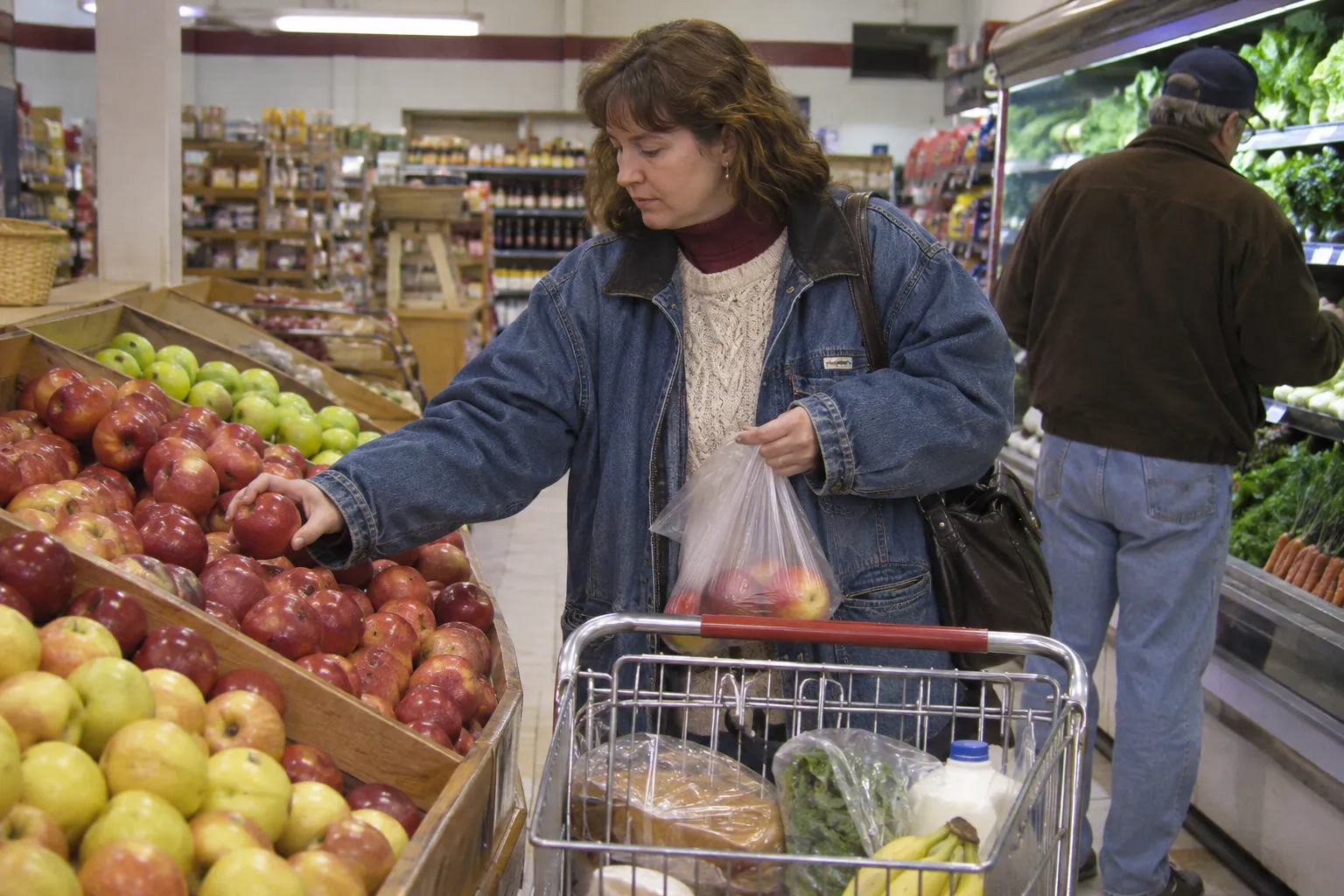
MILLFIELD — Joanne Keller brought a shopping list to Fairway Foods on Monday morning and found herself checking it at the end of nearly every aisle. She had come for her household’s usual groceries, but first she had to learn where the store kept them.
“I knew where everything was in the other place,” she said, looking through her cart for a bag of flour. “Here I keep getting to the end of an aisle and realizing I’ve gone past what I came for.”
Keller was among the residents trying Millfield’s newest grocery store during its first week. Fairway Foods opened Monday, October 11, with a bakery, a deli and introductory specials. Shoppers brought folded circulars and handwritten lists; some paused to compare items on the shelves, while others asked employees for help finding familiar brands.
The opening has been broadly welcomed by residents who see a chance to buy more of their groceries in one trip and compare a wider selection. A vocal minority remains concerned about what a chain store might mean for independent businesses. For many shoppers, the first visit was a chance to see what Fairway offered before deciding how it would fit into their routines.
Keller had marked prices beside several items on her list and planned to look over her receipt at home. She said she would return if the store helped her keep the household grocery bill down, though she expected to continue shopping elsewhere too.
“A few cents doesn’t sound like much when you’re looking at one can. But you don’t come home with one can.”
— Joanne Keller
Near the bakery, customers looked over the day’s bread while an employee answered a question about what was available. At the deli counter, shoppers waited as orders were prepared. In the aisles, people stopped to read labels or doubled back after finding that something on their lists was farther along than they expected.
Manager Denise Talbot said the first few days had given employees a better picture of local demand than preparation alone could provide. Some shelves needed replenishing sooner than expected, and staff were keeping track of products customers requested but could not find.
“You can make a plan for how much bread you’ll need,” Talbot said. “Then Monday comes and you find out whether you were right.”
Employees have also spent time giving directions. Talbot said staff were encouraged to walk customers to an item when possible while people became familiar with the layout. Questions at the counters and checkout have helped her see where the store needs to make its routines clearer.
Bakery and deli workers are learning when their busiest periods fall, and checkout employees have had their first sustained flow of customers. Some employees have grocery experience; others are learning their first retail jobs. Talbot said the opening rush was useful, but she expected ordinary shopping patterns to take longer to emerge.
“We want people to come back when they aren’t curious about us anymore,” she said. “That’s when we find out how we’re doing.”
Walter Haines, who spoke against the store’s arrival, said the number of people willing to shop there did not settle his concern about its longer-term effect. He worried that independent shops would have trouble competing with a company able to buy and sell on a larger scale.
“Of course people are going to go where something costs less,” Haines said. “I’m going to look at the prices myself. What I want to know is how many choices we’ll have after a few years, when some of the smaller places have had to decide whether they can stay open.”
Haines said his objection was to the direction of local business, not to Fairway’s employees. He expected to recognize people working there and did not blame anyone for taking a job.
At Dwyer’s Market, owner Frank Dwyer said it would take time to tell how much of the new store’s traffic reflected opening-week curiosity and how much would become a lasting change in customers’ habits. He was reviewing what sold regularly and which items occupied shelf space without selling.
A smaller market cannot carry the same range as a chain, Dwyer said. He listens when customers ask for something he does not stock, but has to weigh those requests against the room available and the things people already come in to buy.
“If I try to stock everything they’ve got, I’ll run out of room before I get halfway,” he said. “I have to pay attention to what people actually come here for.”
Some customers stop at Dwyer’s for a few things between larger shopping trips; others do most of their shopping there. Dwyer said both mattered, and he could not assume a customer would keep coming simply because the market was familiar.
He visited Fairway on Monday evening, partly to see the store and partly because he needed coffee. Keller, meanwhile, expected her next visit to take less time. She had learned where several items were and planned to bring a shorter list after work.